Editor Brian Harrod Provides Comprehensive up-to-date news coverage, with aggregated news from sources all over the world from the Roundup Newswires Network
Analysis: Germany, France, Spain and Italy head an expanding list of EU countries to have put its use on hold
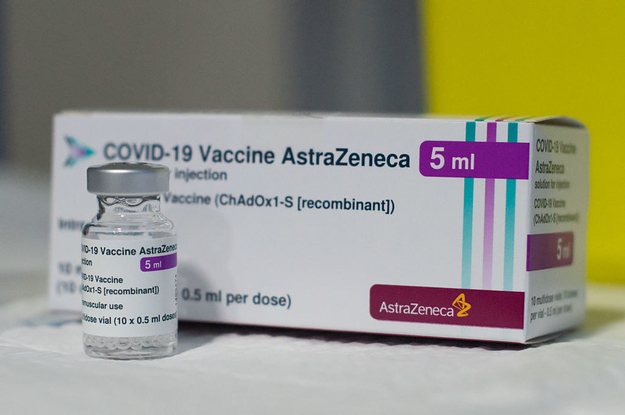
A host of European countries have put all vaccinations with this jab on hold, including Germany, France, Spain, Italy, Denmark, Norway and Ireland. Some others such as Estonia and Austria have suspended vaccinations from particular batches of the vaccine.
So far there’s no clear evidence of a safety problem. But several European countries have paused vaccinations with AstraZeneca’s shots while investigations continue.
The EU’s medicines regulator has said it remains “firmly convinced” the benefits of the Oxford/AstraZeneca Covid vaccine outweigh the risks, but isolated cases of blood clots “are a serious concern and need serious and detailed scientific evaluation”.
Emer Cooke, the head of the European Medicines Agency (EMA), said there was no indication that the shot had caused any of the incidents, but the agency was investigating them thoroughly and would report it conclusions on Thursday.
Creation of mini-organs using stem cells will help research into tear-related disorders
Stop your sobbing – because scientists can do it for you. Using stem cells, Dutch researchers have grown miniature human tear glands capable of “crying”.
Initially, when scientists were looking at developing this technology, their first port of call was the inner lining of the gut, because it replaces itself every five days. They took a tiny piece of gut tissue filled with stem cells and fed it proteins called growth factors to stimulate cell growth, expecting the stem cells to rapidly proliferate.
Six-millennia-old skeleton of child also unearthed during dig in Judean Desert by Israeli archeologists
Israeli archaeologists have unearthed two dozen Dead Sea scroll fragments from a remote cave in the Judean Desert, the first discovery of such Jewish religious texts in more than half a century.
“For the first time in approximately 60 years, archaeological excavations have uncovered fragments of a biblical scroll,” the Israel Antiquities Authority (IAA) said in a statement.
Russia’s Covid vaccines have proven effective against new variants of the coronavirus in trials, a scientist with Moscow’s consumer regulator has said, after the agency reported its first cases of a variant first detected in South Africa (see 10.02am).
Reuters has the story:
In fact, trials have already been done in Russia and we can say with confidence that the [Sputnik V and EpiVacCoriona] vaccines registered in Russia also work against new strains,” Alexander Gorelov, deputy head of research at Rospotrebnadzor’s Institute of Epidemiology, said on state television.
Gorelov gave no details on trials that had tested vaccines against variants first discovered abroad. Researchers conducting trials under the review ordered by Putin said on 27 February that results were looking strong when volunteers were re-vaccinated with Sputnik V against new mutations of the virus.
Public health experts in the US have called for access to vaccines to be widened to better cater for Latino migrants – among the groups hardest hit by Covid-19.
Zackary Berger and Kathleen Page, both associate professors at the Johns Hopkins School of Medicine, and Alicia Fernández, a professor of medicine at the University of California, San Francisco, write:
Current vaccine priority algorithms are inequitable, particularly those that focus on age. Almost 90% of deaths among whites have been in people over 65, but, as CDC data clearly indicate, among Latinos and African Americans more than one-third of those dying of Covid-19 have been younger than 65. And although shared living spaces have undoubtedly fueled the rapid transmission of Covid-19 in immigrant communities, living in a crowded house does not qualify people for the vaccine.
As for essential workers, it’s one thing for a hospital employee to prove they are a healthcare worker, but another thing entirely for a day laborer getting paid in cash to show proof of occupation. Finally, while people all over the country are struggling with poorly designed websites and busy call centers, these approaches are particularly insurmountable for low-income Latino workers who lack the digital skills, language capabilities and time to overcome these barriers.
Study of tree rings dating back to Roman empire concludes weather since 2014 has been extraordinary
The series of severe droughts and heatwaves in Europe since 2014 is the most extreme for more than 2,000 years, research suggests.
The study analysed tree rings dating as far back as the Roman empire to create the longest such record to date. The scientists said global heating was the most probable cause of the recent rise in extreme heat.
It’s human nature to spot patterns in data. But we should be careful about finding causal links where none may exist
Stories about people getting blood clots soon after taking the Oxford/AstraZeneca vaccine have become a source of anxiety among European leaders. After a report on a death and three hospitalisations in Norway, which found serious blood clotting in adults who had received the vaccine, Ireland has temporarily suspended the jab. Some anxiety about a new vaccine is understandable, and any suspected reactions should be investigated. Butin the current circumstances we need to think slow as well as fast, and resist drawing causal links between events where none mayexist.
As Ireland’s deputy chief medical officer, Ronan Glynn, has stressed, there is no proof that this vaccine causes blood clots. It’s a common human tendency to attribute a causal effect between different events, even when there isn’t one present: we wash the car and the next day a bird relieves itself all over the bonnet. Typical. Or, more seriously, someone is diagnosed with autism after receiving the MMR vaccine, so people assume a causal connection – even when there isn’t one. And now, people get blood clots after having a vaccine, leading to concern over whether the vaccine is what caused the blood clots.
Parents whose only hope was finding foreign sponsorship or a clinical trial are now looking for homegrown breakthroughs
For three years, Vidya tried to find the cause of her son’s recurrent fevers and low cognitive development. When she found out, she was devastated.
Vineeth, 10, has an incurable illness – mucopolysaccharidosis type 2 – that affects his organs. Afflicting just one in a million, the enzyme-replacement medication that can help stop the illness getting any worse costs £100,000 a year, far beyond the reach of even a wealthier Indian parent.
Brazil has reported 1,127 further Covid-19 deaths in the past 24 hours and 43,812 new cases of the coronavirus, the health ministry said as the pandemic’s most lethal week for the country comes to an end.
The South American country has now registered a total of 11,483,370 cases, Reuters reports.
France must do everything to avoid another lockdown as pressure on hospitals grows, prime minister Jean Castex has said as the country added more than 26,000 new cases to its tally.
Rather than send the country into a third national lockdown, the French government has implemented a 6pm nationwide curfew and weekend lockdowns in two hotspot regions while shutting shopping centres.
We have to use all weapons available to avoid a lockdown. I’ve never hid it, let’s vaccinate, protect ourselves, get tested,” Castex said on Sunday.
The situation is not getting better, there is a higher and higher number of infections and hospitals are very burdened with many patients, whose average age is getting lower and who don’t always have comorbidities.”
On Friday, the chief minister of the Isle of Man announced some bad news. A patient in the island’s Noble’s hospital had died from coronavirus, he said, the first Manx Covid death since 5 November.
Howard Quayle said he knew the news would “come as a blow” to the Isle of Man’s 85,000 residents. “The death of a member of our island community is a painful reminder of how dangerous this virus is,” he added.
Ireland is suspending use of the Oxford/AstraZeneca coronavirus vaccine as a precautionary measure following further reports of blood clots in people who have received it, this time from Norway.
The deputy chief medical officer, Dr Ronan Glynn, said Ireland’s advisory body on vaccines had recommended that deployment of the AstraZeneca jab should be “temporarily deferred” with immediate effect. He stressed, though, that there was no proof that the vaccine had caused blood clots.
This week sees the opening of the first UK high-street clinic offering psychedelic-assisted therapy. Could popping psilocybin be the future of mental healthcare?
In the summer of 1981, when he was 13, Grant crashed a trail motorbike into a wall at his parents’ house in Cambridgeshire. He’d been hiding it in the shed, but “it was far too powerful for me, and on my very first time starting it in the garden, I smashed it into a wall”. His mother came outside to find the skinny teenager in a heap next to the crumpled motorbike. “I was in a lot of trouble.”
Grant hadn’t given this childhood memory much thought in the intervening years, but one hot August day in 2019, it came back to him with such clarity that, at 53, now a stocky father of two, he suddenly understood it as a clue to his dangerously unhealthy relationship with alcohol.
Birx, who was criticised for not standing up to Trump over Covid, takes job with Texas company that says its purifiers clean virus from the air
Dr Deborah Birx, the former Trump White House coronavirus taskforce coordinator, is taking a private sector job, joining a Texas manufacturer that says its purifiers clean Covid-19 from the air within minutes and from surfaces within hours.
Birx will join Dallas-based ActivePure as chief scientific and medical adviser, she and the company said on Friday.
Researchers claim breakthrough in study of 2,000-year-old Antikythera mechanism, an astronomical calculator found in sea
From the moment it was discovered more than a century ago, scholars have puzzled over the Antikythera mechanism, a remarkable and baffling astronomical calculator that survives from the ancient world.
The hand-powered, 2,000-year-old device displayed the motion of the universe, predicting the movement of the five known planets, the phases of the moon and the solar and lunar eclipses. But quite how it achieved such impressive feats has proved fiendishly hard to untangle.
Russian space agency Roscomos and Chinese counterpart CNSA to develop research facilities on surface of moon or in its orbit
Russia and China have unveiled plans for a joint lunar space station, with the Russian space agency Roscomos saying it has signed an agreement with China’s National Space Administration (CNSA) to develop a “complex of experimental research facilities created on the surface and/or in the orbit of the moon”.
The CNSA, for its part, said the project was “open to all interested countries and international partners” in what experts said would be China’s biggest international space cooperation project to date.
New findings cement idea that ritual and religion was invoked using talismans to soothe nerves
With sky-high levels of maternal mortality, the science of obstetrics virtually nonexistent and the threat of infectious disease always around the corner, pregnant medieval women put their faith in talismans to bring them divine protection during childbirth.
From amulets to precious stones, the list of items that the church lent to pregnant women was substantial, but the most popular lucky charm was a “birthing girdle”.
Dr Agnes Kalibata responds to a report on the 2021 summit that she is leading as a special envoy for the UN secretary general
As you note in your article (Farmers and rights groups boycott food summit over big business links, 4 March), farmers have for too long been on the fringes of global discussions about hunger, poverty and climate change, despite being the frontline of our food systems and the custodians of our natural resources.
The UN food systems summit marks a momentous opportunity for farmers, producers and many others who support them to be at the heart of the year-long consultative process that has been launched to improve our shared food system.
The idea that vitamin D supplements can reduce susceptibility to, and the severity of, Covid-19 is seductive – it offers a simple, elegant solution to a very complex and lethal problem. But analyses encompassing large European datasets suggest the enthusiasm for the sunshine vitamin may be misplaced.
Two still to be peer-reviewed papers looked at the link between vitamin D levels and Covid-19 and both reached the same conclusion: evidence for a direct link between vitamin D deficiency and Covid outcomes is lacking.