Covid live: more than 325,000 in England get boosters in one day as UK chancellor rejects calls for immediate ‘plan B’

Latest updates: NHS chief says Saturday was ‘biggest day yet for Covid booster jabs’ as Rishi Sunak says Covid numbers don’t suggest action needed today

China has given complete doses of Covid-19 vaccines to about 75.6% of its population as of 23 October, National Health Commission spokesperson Mi Feng said on Sunday.

Some 1.068 billion people have been inoculated with the required dosages, out of a population of 1.412 billion, Mi told a news briefing.

Continue reading...

Mummy’s older than we thought: new find could rewrite history

Discovery of nobleman Khuwy shows that Egyptians were using advanced embalming methods 1,000 years before assumed date

The ancient Egyptians were carrying out sophisticated mummifications of their dead 1,000 years earlier than previously thought, according to new evidence which could lead to a rewriting of the history books.

The preserved body of a high-ranking nobleman called Khuwy, discovered in 2019, has been found to be far older than assumed and is, in fact, one of the oldest Egyptian mummies ever discovered. It has been dated to the Old Kingdom, proving that mummification techniques some 4,000 years ago were highly advanced.

Continue reading...

Good vibrations: tapping in to ASMR

ASMR, the euphoric tingling certain sounds provoke, has created online superstars with millions of followers. Is it just a weird fad, or could it help people with anxiety and depression?

When I was five years old something strange happened. After a busy afternoon finger-painting and running around, we were gathered by our teacher on the classroom carpet to listen to a story. I can’t remember which book she read – only that she began to do so in a soft voice, pitched somewherejust above a whisper.

Suddenly, a euphoric, tingling sensation started at the crown of my head and then travelled down my neck and back in waves. The more she read, the stronger the feeling became. I glanced at my friends, expecting to see them in a similar state of rapture, but they weren’t. So I kept the feeling a secret and soon forgot all about it.

Continue reading...

I knew that was going to happen… The truth about premonitions

Uncanny and creepy, premonitions that turn out to be authentic can feel profound. But is there science to explain them?

Around seven years ago, Garrett, was in a local Pizza Hut with his friends, having a day so ordinary that it is cumbersome to describe. He was 16 – or thereabouts – and had been told by teachers to go around nearby businesses and ask for gift vouchers that the school could use as prizes in a raffle. There were five other teenagers with Garrett, and they’d just finished speaking to the restaurant manager when suddenly, out of nowhere, Garrett’s his body was flooded with shock. He felt cold and clammy and had an “overwhelming sense that something had happened”. He desperately tried to stop himself crying in front of his peers.

“It was like I’d just been told something terrible,” the now 23-year-old from the southwest of England says (his name has been changed on his request). “I couldn’t tell you exactly what it was, but I just knew something had happened.” Garrett returned home and tried to distract himself from a feeling he describes as grief. The phone rang. His mum answered it. A few hours earlier – around the time Garrett was in the restaurant – his grandfather had died from a sudden heart attack while on a cruise.

Continue reading...

Covid testing failures at UK lab ‘should have been flagged within days’

Senior scientists say problems at Immensa site show private firms should not be carrying out PCR tests

Health officials should have known about major failings at a private Covid testing lab within days of the problem arising, rather than taking weeks to shut down operations at the site, senior scientists say.

About 43,000 people, mostly in south-west England, are believed to have wrongly been told they did not have the virus by Immensa Health Clinic’s laboratory in Wolverhampton in a debacle described as one of the worst scandals in the UK’s Covid crisis.

Continue reading...

How to retrain your frazzled brain and find your focus again

Are you finding it harder than ever to concentrate? Don’t panic: these simple exercises will help you get your attention back

Picture your day before you started to read this article. What did you do? In every single moment – getting out of bed, turning on a tap, flicking the kettle switch – your brain was blasted with information. Each second, the eyes will give the brain the equivalent of 10m bits (binary digits) of data. The ears will take in an orchestra of sound waves. Then there’s our thoughts: the average person, researchers estimate, will have more than 6,000 a day. To get anything done, we have to filter out most of this data. We have to focus.

Focusing has felt particularly tough during the pandemic. Books are left half-read; eyes wander away from Zoom calls; conversations stall. My inability to concentrate on anything – work, reading, cleaning, cooking – without being distracted over the past 18 months has felt, at times, farcical.

Continue reading...

Countdown to ecstasy: how music is being used in healing psychedelic trips

Jon Hopkins timed his upcoming album to the length of a ketamine high, while apps are using AI music to tailor drug experiences. Welcome to a techno-chemical new frontier

Two hundred psychedelic enthusiasts have converged in Austin, Texas for a “ceremonial concert” on the autumn equinox. People sprawl on yoga mats around a circular stage as staffers pace the candlelit warehouse, jingling bells and spritzing essential oils. While psychedelic drugs are prohibited, some attenders seem in an altered state, lying on their backs and breathing heavily as rumbles of bass from Jon Hopkins’ upcoming album, Music for Psychedelic Therapy, shakes the hushed space.

This is the first time Hopkins – known for acclaimed solo electronic albums as well as production for Coldplay and Brian Eno – has played his new record in public, and the crowd is visibly moved. As recordings of spiritual guru Ram Dass’s teachings fill the room on the final song, the woman next to me begins silently weeping.

Continue reading...

Natural habitats of 30 cities around the world at risk due to ‘coastal hardening’, study suggests

Researchers estimate 1m sq km of seascape globally has been modified by coastal structures which bring in invasive species and damage habitat

Artificial structures have replaced more than half of the coastline of 30 cities around the world, according to new research suggesting coastal infrastructure will have a significant ecological impact if not well managed.

“Coastal hardening” – replacing natural coastal habitats with seawalls, breakwalls, wharves and other structures – is “consistently extensive” across cities in North America, the UK, Australia and New Zealand, finds a study published on Friday.

Sign up to receive an email with the top stories from Guardian Australia every morning

Continue reading...

Largest triceratops ever unearthed sold for €6.6m at Paris auction

US collector ‘falls in love’ with 8-metre-long dinosaur found in South Dakota and reassembled in Italy

An 8-metre-long dinosaur skeleton has sold at auction for €6.6m (about £5.5m), more than four times its expected value, to a private collector in the US said to have fallen in love with the largest triceratops ever unearthed.

The 66m-year-old skeleton, affectionately known as Big John, is 60% complete, and was unearthed in South Dakota, in the US, in 2014 and put together by specialists in Italy.

Continue reading...

South Korea launches its first homemade space rocket

President hails ‘excellent’ test, as rocket gets high enough, but fails to put dummy payload into orbit

South Korea’s first domestically produced space rocket reached its desired altitude but failed to deliver a dummy payload into orbit in its first test launch.

The South Korean president, Moon Jae-in, still described the test as an “excellent accomplishment” that takes the country a step further in its pursuit of a space launch programme.

Continue reading...

Global heating ‘may lead to epidemic of kidney disease’

Deadly side-effect of heat stress is threat to rising numbers of workers in hot climates, doctors warn

Chronic kidney disease linked to heat stress could become a major health epidemic for millions of workers around the world as global temperatures increase over the coming decades, doctors have warned.

More research into the links between heat and CKDu – chronic kidney disease of uncertain cause – is urgently needed to assess the potential scale of the problem, they have said.

Continue reading...

Deep within the UK’s shocking Covid data, there may be reasons for optimism

Analysis: soaring cases in schools are adding to the pool of the immune – which could soon see some community infections fall

It is hard to be upbeat about the latest numbers. The government’s Covid dashboard is awash with red and upward-pointing arrows. New cases have climbed 17% on the week. Hospital admissions are up 11% and deaths have increased by 21%. This is not where we wanted to be nearly two years into the pandemic – and 10 months into the most successful mass vaccination campaign in the history of the NHS.

So is this what we have to get used to? Nearly 1,000 hospital admissions a day, and nearly 1,000 deaths a week? There are so many forces at work in a pandemic, operating on different timescales, pushing in opposite directions, that reliable predictions are a fantasy. But delve into the data and there are, perhaps, some reasons for optimism.

Continue reading...

Solar storm confirms Vikings settled in North America exactly 1,000 years ago

Analysis of wood from timber-framed buildings in Newfoundland shows Norse-built settlement 471 years before Columbus

Long before Columbus crossed the Atlantic, eight timber-framed buildings covered in sod stood on a terrace above a peat bog and stream at the northern tip of Canada’s island of Newfoundland, evidence that the Vikings had reached the New World first.

But precisely when the Vikings journeyed to establish the L’Anse aux Meadows settlement had remained unclear – until now.

Continue reading...

Why is it business as usual in England while Covid infections rise?

Analysis: a winter plan has been set out but implementing it could be hampered by political squeamishness

More than 20 months into the Covid pandemic and with a tough winter looming, the public could be excused for having a distinct sense of deja vu.

Infection rates are rising sharply, scientists and senior NHS figures are sounding the alarm – but the business secretary, Kwasi Kwarteng, was touring the broadcast studios on Wednesday morning ruling out a lockdown in England and telling people “absolutely” to book their Christmas parties.

Continue reading...

Jane Goodall on fires, floods, frugality and the good fight: ‘People have to change from within’

The climate emergency has been a wakeup call to everyone, and the ethologist and environmentalist is working as hard as ever to defeat it. She discusses horror, hope and heroism in her late 80s

In Jane Goodall’s new book, there is a vivid description of her “deep bond” with a beech tree in the garden of her childhood home in Bournemouth. She would climb into its branches to read, hauling books and her homework up in a basket, and persuaded her grandmother to bequeath her the tree, named just Beech, in her will. She called the tree, as alive to her as any person or animal, “one of my closest childhood friends”. “There’s Beech,” she says now, pointing to the handsome tree, its leaves glowing in the morning sun, from the front doorstep.

The house, which first belonged to Goodall’s grandmother, is large and lovely, but modest, perhaps little changed from when Goodall lived here as a child; there are various animal feeding bowls in the living room, comfortingly cluttered, where we sit, with big windows that look out on to the garden. Her sister, Judy, and her family live here, and it’s home to Goodall when she’s not travelling the world, spreading her message of hope, and demanding action. Goodall was on her way to give a talk for Compassion in World Farming in Brussels last March, the taxi leaving the driveway, when Judy came rushing out to say it had been called off, and she has been grounded here since, mainly working from her attic bedroom.

Continue reading...
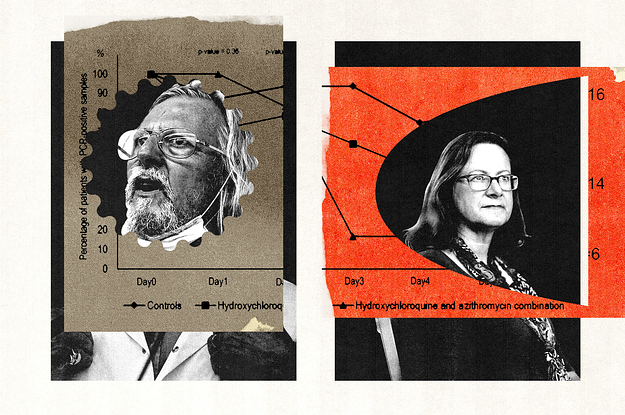
Without Covid-19 jab, ‘reinfection may occur every 16 months’

Reports grow of repeat infection as experts warn prevalence among school pupils puts older people at risk

As Covid-19 infections surge in England, people are increasingly reporting catching Sars-CoV-2 for a second or even third time.

New analysis has suggested that unvaccinated individuals should expect to be reinfected with Covid-19 every 16 months, on average.

Continue reading...

‘Case closed’: 99.9% of scientists agree climate emergency caused by humans

Trawl of 90,000 studies finds consensus, leading to call for Facebook and Twitter to curb disinformation

The scientific consensus that humans are altering the climate has passed 99.9%, according to research that strengthens the case for global action at the Cop26 summit in Glasgow.

The degree of scientific certainty about the impact of greenhouse gases is now similar to the level of agreement on evolution and plate tectonics, the authors say, based on a survey of nearly 90,000 climate-related studies. This means there is practically no doubt among experts that burning fossil fuels, such as oil, gas, coal, peat and trees, is heating the planet and causing more extreme weather.

Continue reading...

Offshoot of Covid Delta variant on the rise in England

UK Health Security Agency monitoring AY.4.2 as daily cases at highest level since late July

A newly detected coronavirus variant is on the rise in England, with the virus believed to be an offshoot of Delta.

According to a briefing from the UK Health Security Agency, released on Friday, “a Delta sublineage newly designated as AY.4.2 is noted to be expanding in England”, with the body adding that the variant is being monitored and assessed.

Continue reading...

Unfreezing the ice age: the truth about humanity’s deep past

Archaeological discoveries are shattering scholars’ long-held beliefs about how the earliest humans organised their societies – and hint at possibilities for our own

In some ways, accounts of “human origins” play a similar role for us today as myth did for ancient Greeks or Polynesians. This is not to cast aspersions on the scientific rigour or value of these accounts. It is simply to observe that the two fulfil somewhat similar functions. If we think on a scale of, say, the last 3m years, there actually was a time when someone, after all, did have to light a fire, cook a meal or perform a marriage ceremony for the first time. We know these things happened. Still, we really don’t know how. It is very difficult to resist the temptation to make up stories about what might have happened: stories which necessarily reflect our own fears, desires, obsessions and concerns. As a result, such distant times can become a vast canvas for the working out of our collective fantasies.

Let’s take just one example. Back in the 1980s, there was a great deal of buzz about a “mitochondrial Eve”, the putative common ancestor of our entire species. Granted, no one was claiming to have actually found the physical remains of such an ancestor, but DNA sequencing demonstrated that such an Eve must have existed, perhaps as recently as 120,000 years ago. And while no one imagined we’d ever find Eve herself, the discovery of a variety of other fossil skulls rescued from the Great Rift Valley in east Africa seemed to provide a suggestion as to what Eve might have looked like and where she might have lived. While scientists continued debating the ins and outs, popular magazines were soon carrying stories about a modern counterpart to the Garden of Eden, the original incubator of humanity, the savanna-womb that gave life to us all.

Continue reading...