Mandela’s sketch of his Robben Island cell door to be sold at auction

Drawing is one of 22 works made in 2002 as therapeutic activity about his incarceration

Of all the sketches he made about his 27-year incarceration, this was the one Nelson Mandela wanted to keep. A depiction of his Robben Island cell door with a key in it – a powerful symbol of hope and resilience.

Now the previously unseen drawing – one of 22 sketches Mandela made in 2002 as therapeutic activity – is to be sold, according to the auction house Bonhams.

Continue reading...

All the presidents’ busts – in pictures

Standing nearly 20 feet high, 43 US presidents’ busts, remnants from a bankrupted theme park, are stored in Croaker, Virginia, on the property of Howard Hankins who is seeking to restore the massive sculptures. Hankins has launched a crowdfunding campaign to raise money to relocate the statues to a place where they can be visited by all

Continue reading...

The upside down: inside Manhattan’s Lowline subterranean park

In two years’ time, the Lower East Side will be home to the world’s first underground ‘green’ space – the Lowline

To get a glimpse of what will eventually become the Lowline, a subterranean Eden being billed as the world’s first underground park, you have to swipe your MetroCard at the Lower East Side’s Delancey Street station, go down one flight of stairs, go down another, slither through a few characteristically congested subway corridors, and then up another flight, to the J train platform.

Here, in the crucible of Manhattan’s public transportation system, with its slow, industrial wheeze, is an abandoned space the size of a football field. Seventy years ago it was the Williamsburg Bridge trolley terminal, transporting city folk between boroughs. But since 1948 it’s existed in a state of dark, musty desertion, save for tall metal columns, a few men in hazmat suits and the outlines of the balloon loops in which the trolleys once turned, which will be integrated into the park’s walkways.

Continue reading...
The $500m Shed: inside New York’s quilted handbag on wheels

This puffed-up cultural citadel was meant to be an endlessly evolving, telescopic arts complex. But the glistening billionaires’ playground rising up beside it had other plans

It seems fitting that the cultural centre of New York’s latest luxury private development should look like a quilted Chanel handbag. Rearing up at the northern end of the High Line on Manhattan’s reborn West Side, the Shed presents a 10-storey wrapping of puffed-up diamond cushions to passersby, standing as the gaudy gateway to Hudson Yards – the most expensive real estate project in US history.

While it might fit in with the gilt-edged world of Swiss watch boutiques and Michelin-starred chefs that awaits in this $25bn private enclave, it is an unlikely costume for what the project’s architect and originator, Liz Diller, insists is “simply a piece of infrastructure” to support whatever artists want to do. “It’s not precious,” she says of the $500m building. “It’s muscular and industrial, just meat and bones.”

Continue reading...

Branded a no-go zone: a trip inside the 93, France’s most notorious banlieue

It is seen as a lawless breeding ground for hooliganism and drug trafficking. But a photographer called Mister Happiness is on a mission to tell the real story about the demonised area

‘She put her pen down,” says Monsieur Bonheur, “and told me to stop dreaming.” The French photographer is recalling the day he told the careers advisor at his school that he wanted to study fashion design. “She said, ‘Your parents won’t have the money to pay for those schools. They won’t be able to pull strings. You should consider something more appropriate for a black kid from the 93, like fixing central heating systems.’”

There is still disbelief in Bonheur’s voice as he recounts this decade-old conversation. “She was reminding me of the codes,” he says, “advising me to play by the rules.”

Continue reading...

‘Like the Eye of Sauron’: western Europe’s tallest building planned for tiny Danish town

Fast-fashion giant Bestseller set to build skyscraper headquarters in Brande, a 7,000-person rural town

Until a local company announced plans to send a 320-metre skyscraper soaring over the surrounding countryside, most people in Denmark had only the haziest idea where Brande, a town of 7,000 people in rural Jutland, even was.

The Bestseller Tower, designed by star architectural studio Dorte Mandrup, will not only be the tallest building in Denmark, but the tallest in western Europe, besting the Shard in London by a crucial 10.4 metres.

Continue reading...

Bauhaus: 100 years old but still ubiquitous in our homes today

How a revolutionary idea became our go-to way of living.

Shop the look: our pick from the high street

Spending a night at the hallowed Bauhaus school in Dessau, in the German state of Saxony-Anhalt, was my teenage dream come true. The walls of my childhood bedroom were plastered not with posters of pop stars, but with the furniture manufacturer Vitra’s wall chart of iconic 20th-century chairs. As a design geek, growing up in a house bedecked with Laura Ashley, I found the idea of the Bauhaus thrilling: each chair was a mini manifesto, embodying the world of stripped-back modern design that I might one day inhabit (I’m still waiting).

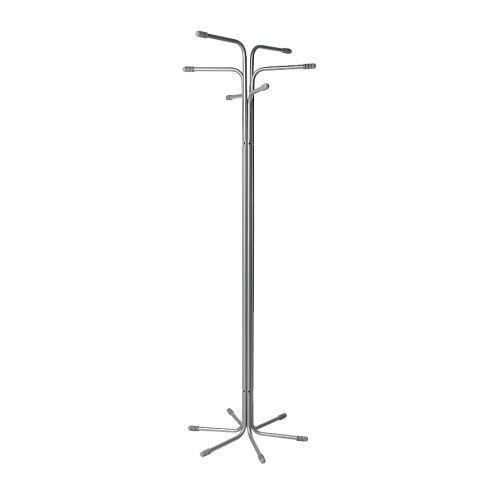
Yet, almost 20 years later, when I got to stay in Josef Albers’ former bedroom in the Bauhaus dormitory block, surrounded by chairs and lamps designed by the school’s various luminaries, it felt disappointingly like a sleepover in an Ikea showroom. There was a stack of four coloured nesting tables in one corner, of the kind readily available from Habitat for £95, but these were in fact Albers’ original version, designed in 1924, now reissued by the German manufacturer Klein & More – yours for £1,614 (from connox.co.uk). In another corner stood a simple bent tubular steel chair by Mart Stam, of the unremarkable sort you find in restaurants and meeting rooms around the world. There was a steel coat stand, too, which I thought betrayed the hand of Marcel Breuer – but which turned out to be from Ikea.

Continue reading...

Art detective Arthur Brand: how I found a stolen Picasso

The man dubbed ‘Indiana Jones of the art world’ says the paintings can ‘become a burden’

The ring at the door of the modest east Amsterdam apartment came late in the day on Thursday 14 March. On the doorstep stood two men “with contacts in the underworld”, Arthur Brand recalls, and with them a large, rectangular package.

Eagerly, Brand removed the covering and examined the contents: Buste de femme (Dora Maar), a portrait by Pablo Picasso of his mistress. Unsigned because it was never sold by the painter, it bore in its bottom-left corner the date he completed it, 26 April 1938, and was worth an estimated €25m (£21.5m).

Continue reading...

The flying saucers have landed: Qatar’s thrilling new supersized museum

It took 18 years to build, with nearly a mile of galleries, and is inspired by a desert rose. But is Jean Nouvel’s eye-popping creation for the world’s wealthiest nation too extravagant to fill?

Hundreds of huge white plates lie scattered along the roadside in the centre of Doha, Qatar, as if someone has had a spectacular accident with a gigantic crockery cupboard. The creamy discs tilt this way and that, colliding with each other in a random muddle along the edge of the highway, forming an otherworldly landscape of canopies, terraces and enigmatic slit windows.

This pile-up of flying saucers is the new National Museum of Qatar, an astonishing creation by French architect Jean Nouvel, and the latest supercharged volley in the Gulf states’ cultural arms race. Two years ago, Nouvel unveiled the glistening upturned colander of the Louvre Abu Dhabi. Now he’s back with another gargantuan palace for the Emirates’ arch rival. In its sprawling nearly mile-long loop of galleries, the museum tells the story of how this tiny nation of nomadic bedouins and pearl divers became, with the discovery of natural gas, the most wealthy country per capita on Earth in just 50 years.

Continue reading...

‘This is blood money’: Tate shuns Sacklers – and others urged to follow

Pressure builds on other institutions to disavow Sackler family over OxyContin, powerful painkiller linked to opioid deaths

Earlier this year at the Guggenheim in New York, activists objecting to donations from the Sackler family draped protest banners from the museum’s famous spiraling balconies, dropped flyers down through the atrium and pretended to die all over the floor. A gobsmacked public looked on.

Tate Modern has just escaped a similar fate.

Continue reading...

Venezuela’s revolution of hunger: a photo essay

Economically destroyed, socially unstable and now hungry, Venezuela is undergoing turbulent times. Photographer Ignacio Marín has been covering the crisis since May 2018. He talks about his images and his experience

For a time the “Saudi Arabia” of South America, today Venezuela more closely resembles Syria. Economically destroyed and socially unstable, the country is now fighting an ever more alarming spectre: hunger. In the slum of Petare in the metropolitan area of the capital, Caracas, refrigerators remain empty, supermarket queues grow longer and the necessity of procuring something to eat drives young people to violence.

Continue reading...

David Bailey: ‘Deneuve said it’s great we’re divorced – now we can be lovers!’

As he powers into his 80s, the photographer recalls shooting everyone from Kate Moss to Andy Warhol, shares his regrets over voting leave – and reveals how Gordon Brown pulled a fast one on him

‘You look knackered,” says David Bailey, greeting me at his studio. It’s up a small mews and sprawls so casually across two floors that it still feels like the 60s inside. “Look at you,” he says. “Your buttons aren’t even done up right.” I look down at my jacket: that bit is true. But I tell him: “I’m not tired!”

“I was watching you walking along the street,” he says. “I thought, ‘That must be the journalist, she looks knackered.’” The combination of acuity (he must be right: he is, after all, the one who makes a living with his eyes) and demonic overfamiliarity (by this point, we are holding hands; I have no idea who started it) is disarming. If this is his shtick, it’s working on me, totally and overwhelmingly. Or maybe he has a tailored shtick for everyone he meets.

Continue reading...

‘Flintstone’ house sparks lawsuit from California town: ‘It’s an eyesore’

The quirky home features dinosaurs and a sign proclaiming ‘Yabba-dabba-doo’, but neighbors aren’t amused

California architecture has captured the world’s imagination with its classic midcentury bungalows and beach houses. But one architectural landmark in the state has gone a distinctively different route, and it’s not to the town’s liking.

The “Flintstones” home in northern California appears to take its architectural cues from the town of Bedrock. The experimental house was built in the 1970s using a technique that involved spraying concrete to create curved walls. The result is a building where Fred and Wilma would feel at home, and it has become a landmark for drivers passing on I-280.

Continue reading...

‘Thai Banksy’ tests boundaries with gallery show before election

Headache Stencil’s work portrays Thai democracy as a game for the ruling elite

His works began appearing overnight on the streets of Bangkok and Chiang Mai five years ago, incendiary satirical depictions of the military officials who took power in Thailand in the 2014 coup.

The authorities worked quickly to erase all trace of the graffiti, but there was no stopping the artist, who calls himself Headache Stencil and is often referred to as the Banksy of Thailand. Pictures of his works portraying the Thai prime minister, Prayut Chan-o-cha, as Dr Evil from Austin Powers or the deputy prime minister on the face of a Rolex have been shared millions of times on social media.

Continue reading...

Italian police reveal ‘€3m painting’ stolen from church was a copy

Masterpiece by 17th-century artist Brueghel the Younger was swapped to foil heist

The heist appeared to have gone entirely according to plan. The thieves broke into the display case in an Italian church on Wednesday morning and made off with a €3m painting by the 17th-century Flemish artist Pieter Brueghel the Younger.

But police revealed that night there had been one hitch – the snatched artwork was a copy.

Continue reading...

Anish Kapoor: ‘If I was a young Muslim, would I feel angry enough to join Isis? I would at least think about it’

Britain has gone through the looking glass and the artist’s new show follows it into the abyss. He talks about the upsurge in racism, fighting for Shamima Begum – and his clash with France’s president

At 7.30 on the morning after Britain voted to leave the European Union, Anish Kapoor left his London flat for an appointment with his analyst. On the street, he heard two men talking. “Bet he doesn’t even speak English,” said one. “I turned around and they were talking about me. I was so furious.”

Sir Anish Mikhail Kapoor, CBE, RA, the 65-year-old, Turner prize-winning, Mumbai-born British-Indian artist, who has lived in London since the early 1970s and (though this is hardly the point) speaks better English than most of his countrymen, had woken up in a new land. “Since then permission has been given for difference, rather than being celebrated, to be undermined.”

Continue reading...