#DoNotTouchMyClothes: Afghan women’s social media protest against Taliban

Women around the world are sharing pictures of themselves in traditional colourful clothes in a campaign against the new strict dress code for female students

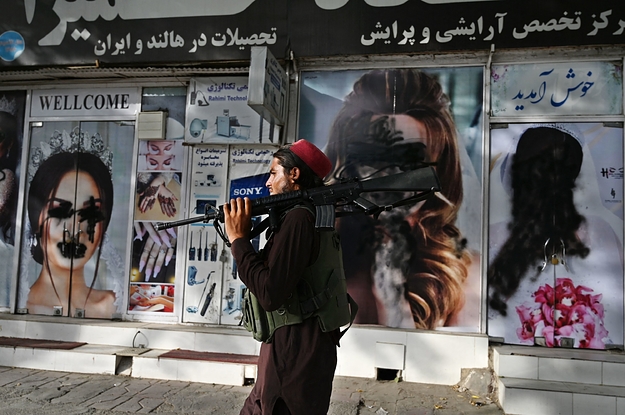
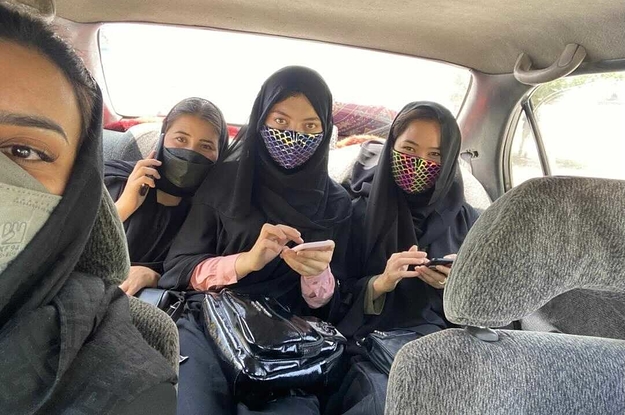
After street demonstrations across major cities in Afghanistan, women have now taken to social media to protest against the Taliban’s hardline policies towards them.

An online campaign has seen Afghan women around the world share photos of themselves wearing traditional colourful clothes, using the hashtag #DoNotTouchMyClothes.

Continue reading...

‘We showed it was possible to create a movement from almost nothing’: Occupy Wall Street 10 years on

Some say it inspired BLM and the growth of the US left. Others see it as an abject failure. A decade after the occupation of New York’s Zuccotti Park, the people who were there look back

“We are the 99%.” Ten years ago that unifying slogan travelled around the world. Some attribute its origin to the economist Joseph Stiglitz, who first popularised the distinction between the 1% of people with great wealth and power and the rest of us. Others say that it was the late anthropologist and anarchist David Graeber who coined the phrase. But everyone agrees that it went global when it was voiced by demonstrators who gathered in lower Manhattan’s financial district on 17 September 2011.

What took place that day, and the two months to follow, would become known as Occupy Wall Street, a protest movement against economic inequality and injustice that spread to 28 other US cities, to European capitals and financial centres, including London, Paris and Berlin, as well as parts of South America and the far east. In total it’s said that there were more than 750 Occupy events around the world, featuring demonstrators ranging from a few tens in some places to many thousands in others.

Continue reading...

‘Deeply rooted tradition’: one man’s long fight to end illegal dowries in India

After 15 years campaigning, Satya Naresh believes it’s time for government action to stop the custom that causes a woman to die every hour through murder or suicide

For more than a decade, Satya Naresh has been trying to persuade India’s men to stop a wedding custom that he sees as one of the country’s worst social evils.

He wants men to declare: “I don’t want dowry”. The line is the name of the website he set up in 2006 as part of his campaign. Naresh wants Indian men not to expect the money, motorbike, sofa, TV, iPhone, gold jewellery or fridge that a future wife is expected to come with.

Continue reading...

Racism doesn’t just exist within aid. It’s the structure the sector is built on | Themrise Khan

To disrupt colonial power inequalities, the global south needs to take more control

There have been many studies published recently on the prevalence of racism in the international aid sector.

They have ranged from definitions of racial equity within global development, to the experiences of black, indigenous and other people of colour working in the sector, to the British government’s delayed sub-inquiry into racism as part of a larger inquiry into the culture and philosophy of UK aid.

Continue reading...

‘Hidden pandemic’: Peruvian children in crisis as carers die

With 93,000 children in Peru losing a parent to Covid, many face depression, anxiety and poverty

When Covid-19 began shutting down Nilda López’s vital organs, doctors decided that the best chance of saving her and her unborn baby was to put her into a coma.

Six months pregnant, López feared she would not wake up, or that if she did, her baby would not be there.

Continue reading...

Rugby, racism and the battle for the soul of Aotearoa New Zealand | John Minto

The Springboks’ tour and the protests that ensued 40 years ago helped set the fight for Māori rights on a stronger path

The 1981 Springbok rugby tour of New Zealand will always have a special place in any narrative about the international fight against apartheid in South Africa.

The protests against the Springboks reverberated around the world – delivering a savage psychological blow to South Africa’s white regime while giving a resounding boost to the oppressed majority.

Continue reading...

‘We can’t go back to normal’: The US had deep inequalities before Covid. These women are fighting to make the recovery equitable

The links between health access, income and race have never been so visible – these doctors, experts and activists see that as an opportunity for a revolution in care

Dr Ana Caskin treats underserved populations in Washington DC, in parts of the city where life expectancy is 20 years lower than it is in places that are a 20-minute train ride away. The last thing she wants when the Covid-19 pandemic finally recedes is for things to go back to “normal”.

Because for the people she treats that would mean limited access to doctors and therapists, healthy food and affordable, safe housing – the type of things that are now proven to help protect people from Covid-19.

Continue reading...

Tax on billionaires’ Covid windfall could vaccinate every adult on Earth

Analysis finds 99% levy on pandemic wealth rise could also pay all unemployed $20,000 – and still leave super-rich $55bn richer

Every adult in the world could get a Covid-19 vaccine if the wealth billionaires collected during the pandemic was taxed 99% once, according to an analysis published on Thursday by several groups that advocate for economic equity.

This one-time tax on the world’s 2,690 billionaires could also cover $20,000 in cash paid to all unemployed workers, according to the analysis by Oxfam, the Fight Inequality Alliance, the Institute for Policy Studies and the Patriotic Millionaires.

Continue reading...

Sex workers fighting for human rights among world’s most ‘at risk activists’

Exclusive: Front Line Defenders report says rights defenders working in sex industry face ‘targeted attacks’ around the world

Sex worker activists are among the most at risk defenders of human rights in the world, facing multiple threats and violent attacks, an extensive investigation has found.

The research, published today by human rights organisation Front Line Defenders, found that their visibility as sex workers who are advocates for their communities’ rights makes them more vulnerable to the violations routinely suffered by sex workers. In addition, they face unique, targeted abuse for their human rights work.

Continue reading...

Why are low-risk countries on the Covid travel ‘red list’? | Letters

Dr Peninah Murage says the unjust traffic light system penalises poor countries even though some have relatively low numbers of cases. Plus Dot Mornington-West on being under house arrest after returning from France

Can the Guardian please investigate the rationale behind the Covid travel restrictions relating to “red list” countries? Some of the countries on the red list, such as Kenya, have very low Covid cases and deaths, but are among the world’s poorest and with little influence on government policy.

Essentially, the UK government is using this list to appease the public who need to see the government doing something – but at the same time the government is assured that the backlash will be minimal because these countries have very little voice.

Continue reading...

‘Do you blame us for house prices?’ Gen Zers answer baby boomers’ biggest questions

What is really going on with virtual sex and identity politics - and when did people stop caring about snooker? Four people born in 2000 offer their advice to people in their 50s, 60s and 70s

When interaction between the generations is interrupted – and there doesn’t even have to be a pandemic; sometimes we just forget to call each other – it is easy for misunderstandings to flourish. Negative perceptions can build to such a pitch that, even if you had your grandchildren standing right in front of you, you possibly wouldn’t want to tackle them head-on. Or perhaps your perceptions aren’t negative – there are just pockets of puzzlement.

Four zoomers – Patrick Baggaley, Freya Scott-Turner, Rachel Ayo Ogunleye and Aidan Nylander, all born in 2000 – are here to clear up everything. Baggaley is a chef based in London; Scott-Turner is studying journalism and living in Cambridge; Ayo Ogunleye is studying medicine and based in Beckenham, south London; and Nylander is between two degrees and lives in Newcastle.

Continue reading...

‘You’re not snowflakes’: baby boomers answer gen Z’s biggest questions

It can feel as if the generation gap is wider than ever – but not when people really talk. Here, four sixtysomethings offer advice to those in their teens and 20s

We live in an era in which, for the most part, the generations do not mix frequently. Grandparents are visited occasionally; young people seek the freedom of independent living as early as possible. On social media, intergenerational warfare is commonplace, as members of gen Z (those born between the mid-90s and the early 10s) criticise older people for hoarding wealth, while baby boomers bemoan the perceived sensitivity of the younger generation.

But what would happen if baby boomers gave the TikToking young adults of today an insight into their thinking – and threw some life advice into the bargain? To that end, we assembled a panel of baby boomers – Tayo Idowu, 64, a marketing director from London; Liz Richards, 68, a retired nurse from Derby; Paul Gibson, 63, an accountant from Arundel, West Sussex; and Maggie Tata, 65, a carer from London – to answer gen Z’s questions (even the tongue-in-cheek ones).

Continue reading...

Aid cuts make a mockery of UK pledges on girls’ education | Zoe Williams

The government’s words at the global education summit are completely at odds with its behaviour. Whatever the event achieves will be despite its UK hosts, not because of them

With all the fanfare Covid would allow, the global education summit opened in London this week. Ahead of the meeting, the minister for European neighbourhood and the Americas was on rousing form. “Educating girls is a gamechanger,” Wendy Morton said, going on to describe what a plan would look like to do just that.

The UK, co-hosting the summit with Kenya’s president, Uhuru Kenyatta, plans to raise funds for the Global Partnership for Education, from governments and donors. The UK government has promised £430m over the next five years.

Continue reading...

Gross inequality stoked the violence in South Africa. It’s a warning to us all | Kenan Malik

The country’s social contract has broken, fuelled by corruption and extreme poverty

‘It feels qualitatively different this time.” There are few people I know in South Africa who don’t think this about the carnage now engulfing the nation. Violence was institutionalised during the years of apartheid. In the post-apartheid years, it has rarely been far from the surface – police violence, gangster violence, the violence of protest. What is being exposed now, however, is just how far the social contract that has held the nation together since the end of apartheid has eroded.

Many aspects of the disorder are peculiar to South Africa. There are also themes with wider resonance. Events in the country demonstrate in a particularly acute fashion a phenomenon we are witnessing in different ways and in degrees of severity across the globe: the old order breaking down, with little to fill the void but sectarian movements or identity politics.

Continue reading...

I thought HIV meant death but it led me to fight to save millions of lives | Vuyiseka Dubula

Twenty years ago in South Africa people were dying unable to access expensive antiretrovirals. The creation of the Global Fund was gamechanging

In 2001, at the age of 22 – when I thought my life had just begun – I was diagnosed with HIV. At that time, the diagnosis felt like a death sentence. Every day, I waited for my hour to die.

However, after two months of waiting, death didn’t come.

Continue reading...

New York’s patchwork recovery masks vast inequities laid bare by Covid

There are signs of renewal in a city that has weathered crisis after crisis, but what its future looks like remains an open question

For most of the past year, Manhattan’s signature yellow cabs have been a rarity on the avenues and cross-streets. Now, as the city picks up and office workers begin to return, they too are returning – but not yet on a pre-pandemic scale. At the same time, the city is gridlocked by traffic.

A patchwork of indicators suggest the recovery from a pandemic that hit hard and early, caused close to 30,000 deaths out of a 8.4-million population and placed the metropolis in an economic deep-freeze will be similarly uneven.

Continue reading...

‘Wage theft’ in Primark, Nike and H&M supply chain – report

No laws were broken but brands failed to ensure workers were paid properly during the pandemic, says Clean Clothes Campaign

Campaigners claim to have found evidence of “wage theft” in the supply chains of Primark, Nike and H&M in a report that outlines the devastating consequences of the pandemic on garment workers in Indonesia, Cambodia and Bangladesh.

Research by the Clean Clothes Campaign found that, while none of the brands had broken any laws, they had failed to ensure that their workers were properly paid throughout the pandemic.

Continue reading...