Editor Brian Harrod Provides Comprehensive up-to-date news coverage, with aggregated news from sources all over the world from the Roundup Newswires Network
Academics suspect papers with grabby conclusions are waved through more easily by reviewers
Scientific research findings that are probably wrong gain far more attention than robust results, according to academics who suspect that the bar for publication may be lower for papers with grabbier conclusions.
Studies in top science, psychology and economics journals that fail to hold up when others repeat them are cited, on average, more than 100 times as often in follow-up papers than work that stands the test of time.
Covid infection levels are showing early signs of an increase in England, data has revealed, as experts continue to warn the variant of concern first detected in India could grow exponentially in the UK.
On Friday Boris Johnson told broadcasters in Portsmouth he has seen nothing to suggest it will be necessary to “deviate from the roadmap”, indicating that the planned lifting of all coronavirus restrictions in England on 21 June may yet go ahead.
Climate politics is a long game but people must see more positive changes to really appreciate the benefits of ending fossil fuels
The New Zealand emissions trading scheme (ETS), now in its fourteenth year of operation and much criticised for (so far) failing to cut emissions, is the centrepiece of the government’s climate action. Judging from Budget 2021, it will remain that way for years to come.
Auctioning of emissions units began in March, and 2022 will see the introduction of a falling cap on net emissions of long-lived greenhouse gases. (The precise level of the cap will be announced later in the year.)
Pressure growing for UK and others to follow Biden’s lead at WTO to avoid ‘moral and public health failure’
The UK government is in talks about a plan to waive Covid-19 vaccine patents to boost the production of shots in low and middle-income countries, the Guardian can reveal.
The discussions come amid growing calls for Britain and other European countries to follow the US in supporting the proposal put before the World Trade Organization (WTO).
Was the explorer from Italy, Spain, Portugal or elsewhere? Researchers hope to find out once and for all
Spanish researchers have launched a new attempt to finally settle the dispute over the true origins of Christopher Columbus after various theories have claimed the explorer hailed from Portugal or Spain, rather than Italy as most scholars agree.
“There is no doubt on our part [about his Italian origin], but we can provide objective data that can … close a series of existing theories,” said José Antonio Lorente, the lead scientist of the DNA study at the University of Granada.
What would it have been like to be inside the Big Bang? We meet the ultra-hi-tech art duo who are using light, sound and sub-atomic astro data to recreate the biggest explosion ever
‘Step into the heart of the Big Bang,” says the advert for Halo, a walk-in, 360-degree, audiovisual installation about to open in Brighton. Come off it, I want to retort. You couldn’t “step” into the Big Bang without first travelling 13.8 billion years back in time and then being extremely miniaturised. After all, the universe was, according to one estimate, just 17cm in diameter at its inception.
What’s more, it was dark inside the Big Bang. In fact, there was no light at all. True, if you stuck around for 380,000 years, according to Nasa, you might have been able to see something because that was when free electrons met up with nuclei and created neutral atoms that would have allowed light to pass through. But who has 380,000 years to hang around waiting in the dark?
Study analysing brain scans of people finds psychedelic drug lowers barriers that constrain thoughts
When Aldous Huxley emerged from a mescaline trip that veered from an obsession with the folds in his trousers to wonder at the “miraculous” tubularity of the bamboo legs on his garden chairs, he offered an opinion on how the drug worked.
Writing in The Doors of Perception, his 1954 book that took its name from a William Blake poem, Huxley declared that the psychedelic “lowers the efficiency of the brain as an instrument for focusing the mind on the problems of life”.
Tunisia has ended its one-week lockdown, despite having the highest reported deaths per capita of any country in Africa.
Covid-19 cases in Tunisia were initially low last year, with a sweeping six-week lockdown involving the closure of borders and shutting down all but essential commercial activity appearing to halt the spread of the virus. However, since easing that original lockdown cases have increased, with daily reported infections and deaths now the highest in Africa, according to Our World in Data.
Monday’s change in the rules was supposed to be a moment of celebration – but the new variant spreading in the UK meant it came with a cautionary note. Can the next stage of the government’s ‘irreversible’ plan go ahead?
This time last week, most of us were feeling optimistic about the next step in the government’s “irreversible” plan to end lockdown. Then scientists started to warn that the accelerating spread of the India variant of coronavirus meant that we should proceed carefully – and even consider slowing down.
While the plans went ahead on Monday, they came with a heavy dose of caution and warnings that the last stage of the relaxation set for 21 June could be delayed. The Guardian’s science correspondent Nicola Davis tells Anushka Asthana about the latest setback in the fight against Covid – and what it means for what happens next.
Scientists say ice equivalent to 1-2 metres of sea level rise is probably already doomed to melt
A significant part of the Greenland ice sheet is on the brink of a tipping point, after which accelerated melting would become inevitable even if global heating was halted, according to new research.
Rising temperatures caused by the climate crisis have already seen trillions of tonnes of Greenland’s ice pour into the ocean. Melting its ice sheet completely would eventually raise global sea level by 7 metres.
The Covid variant first detected in India is set to be the dominant strain in the UK within days, experts have said, with the government and health teams struggling to contain cases, which have risen by more than 75% since Thursday.
With the rapid spread of the more transmissible B.1.617.2 variant threatening to reverse moves to ease lockdown, the government faced intense pressure to more fully explain the delay in adding India to the so-called red list of countries.
The Nobel-winning psychologist on applying his ideas to organisations, why we’re not equipped to grasp the spread of a virus, and the massive disruption that’s just round the corner
Daniel Kahneman, 87, was awarded the Nobel prize in economics in 2002 for his work on the psychology of judgment and decision-making. His first book, Thinking, Fast and Slow, a worldwide bestseller, set out his revolutionary ideas about human error and bias and how those traits might be recognised and mitigated. A new book, Noise: A Flaw in Human Judgment, written with Olivier Sibony and Cass R Sunstein, applies those ideas to organisations. This interview took place last week by Zoom with Kahneman at his home in New York.
I guess the pandemic is quite a good place to start. In one way it has been the biggest ever hour-by-hour experiment in global political decision-making. Do you think it’s a watershed moment in the understanding that we need to “listen to science”? Yes and no, because clearly, not listening to science is bad. On the other hand, it took science quite a while to get its act together.
Boris Johnson was under mounting pressure on Saturday to reconsider Monday’s relaxation of Covid rules in England because of the threat posed by the India variant. His own advisers and independent health experts raised fears that it could lead to a surge in hospital admissions, especially among young adults.
From Monday people will be able to meet in groups of up to 30 outdoors, while six people or two households will be permitted to meet indoors. Pubs, bars, cafes and restaurants will be allowed to serve customers indoors. Indoor entertainment such as museums, cinemas and children’s play areas can also open along with theatres, concert halls, conference centres and sports stadiums.
It can be debilitating and last a lifetime, but type 2 diabetes, if caught early, can be reversed with weight loss
It’s 10 years since Professor Roy Taylor revolutionised treatment for type 2 diabetes with a groundbreaking study that showed the disease could be reversed through rapid weight loss. Until his research was published, type 2 diabetes was thought to be an incurable, lifelong condition. Now, for many people, we know it is not.
But his achievements – and the thousands of people he has cured – are not something he dwells upon. “I’m in a very lucky position of being able to do this research,” he says, “which really extends what I’ve been doing as a doctor throughout my life.” He laughs at the suggestion that he must occasionally marvel at his own success: “No, no,” he chuckles. “Lots of occupations make a useful contribution to society. I wouldn’t set myself apart.”
Across Poland, bars and restaurants have opened their outdoor terraces for the first time in over six months, with masks not being required outdoors where social distancing can be observed.
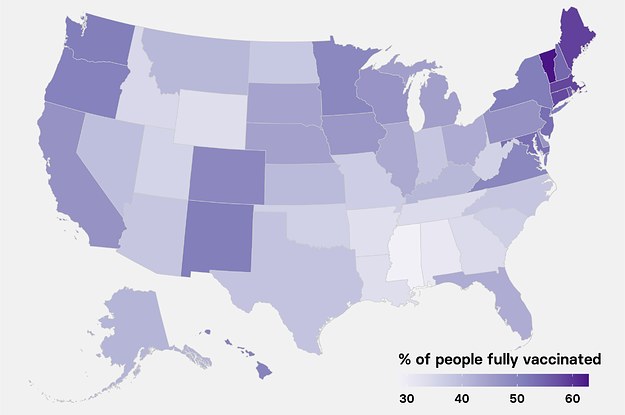
On Friday, Poland had 3,288 new coronavirus cases compared with a high of 35,251 on 1 April. Some 35.7% of adult Poles have received at least one dose of vaccine and 13.6% are fully vaccinated, according to the European Centre for Disease Prevention and Control.
Bars and restaurants can now offer outdoor service, with indoor service due to reopen with limited capacity on May 28. Since October, they have been able to serve only take-away food.
“We’ve been closed for so long, over 200 days, and it was very stressful and exhausting for different reasons, we didn’t know if we could survive at all,” said Zuzia Mockallo, 34, co-owner of Bar Studio, located in the capital’s landmark building, the Palace of Culture and Science.
Thailand has planned to allow restaurants to resume dine-in services in its capital, Bangkok, a senior official has said, but opening hours and the number of diners will be limited as the country faces a third wave of infections.
Since April, Thailand has faced its deadliest coronavirus outbreak. Thailand reported 3,095 new coronavirus cases and 17 deaths today, bringing total cases to 99,145 and 565 deaths. Of the new cases, 1,163 were in Bangkok.
Restaurants in dark red zones like Bangkok will be allowed to reopen for dine-in services but at a limited capacity of 25% and will have to close at 9pm (1400 GMT), said Taweesin Wisanuyothin, a coronavirus taskforce spokesman.
Restaurants in dark red zones, which have the highest risk of infection and the strictest restrictions, could previously only open for delivery.
The possible spread of the highly transmissible B.1.617.2 variant of Covid, first identified in India, threatens to hamper the timetable for removing lockdown restrictions, since a series of localised outbreaks have been detected.
Here are some possible actions that could be used to limit the spread of the variant:
It was all looking so good. After a brutal second wave in the winter, the lockdown combined with the swift rollout of vaccines forced infections, hospitalisations and deaths down to levels not seen since last summer. The vaccines performed better than expected, not only in preventing deaths, but in hampering the spread of the virus. Scientific advisers were confident about England’s cautious roadmap back to a life more normal: the worst, it seemed, was over.
Now, those same advisers are deeply worried that the new variant of concern from India, B.1.617.2, could undermine the hard-won achievement. The government strategy has been to ease restrictions as vaccines reach more people, aiming for a delicate balance that opens up society while preventing another wave that overwhelms the NHS.
Administering one dose of the Pfizer/BioNTech vaccine followed by one of the Oxford/AstraZeneca vaccine (or vice versa) induces a higher frequency of mild to moderate side-effects compared with standard two doses of either vaccine, initial data from a key UK trial suggests.
The Oxford-led Com-Cov study is exploring the safety and efficacy of mixed-dose schedules given that they are being considered in several countries – including the UK – to fortify vaccine rollout programmes that are dependent on unstable vaccine supplies.
Greece is to lift its internal travel restrictions on 14 May, the day it’s tourism season opens, officials have said, whilst retaining health safeguards for the country’s more vulnerable islands.
AFP reports:
For the first time since a second Covid-19 lockdown was imposed in November, Greeks will no longer be required to notify authorities by SMS when leaving their homes. However, anyone travelling to Greek islands by sea or air must show a vaccination certificate or a negative test result, minister Akis Skertsos told reporters.
Officials aim to fully vaccinate at least 35% of island populations by the end of June. Greece is keen to attract crowds of holidaymakers back to its idyllic islands, which are some of its most popular travel destinations, with tourism bringing in as much as a quarter of Greece’s annual income
We now have confirmation that Norway will not resume the use of AstraZeneca’s Covid vaccine and has delayed a decision on whether to start using jabs made by Johnson & Johnson, following a press conference led by the country’s prime minister Erna Solberg.
It comes after a government-appointed commission recommended that both vaccines should be excluded from Norway’s vaccination programme due to a risk of rare but harmful side-effects.
Man, known as T5, was able to write 18 words a minute with more than 94% accuracy on individual letters
A man who was paralysed from the neck down in an accident more than a decade ago has written sentences using a computer system that turns imagined handwriting into words.
It is the first time scientists have created sentences from brain activity linked to handwriting and paves the way for more sophisticated devices to help paralysed people communicate faster and more clearly.