Crazy Samurai: 400 vs 1 review – epic, single-take battle of bloody-minded intensity

Only the most hardcore action junkies will have the stamina for what is essentially one marathon sword-fighting scene

The craziness is all in the idea of this singular Japanese action movie: essentially one marathon battle scene, filmed in a single take, in which a master swordsman takes down several hundred assailants. The execution, as it were, is a triumph of stuntwork, strategy and stamina, but in the watching it gets rather repetitive and wearying. Few but the most hardcore action junkies will really be up for it.

The set-up is quickly dealt with: a clan rallies in the forest around its newly anointed leader, a small boy, in anticipation of an attack. Attack there swiftly comes, in the form of Musashi Miyamoto: real-life master swordsman, 17th-century folk hero, and fixture of Japanese pop culture (Toshiro Mifune played him four times; Kinnosuke Nakamura played him seven times). Here, the role is filled with focused athleticism by local action hero Tak Sakaguchi, although acting abilities play a distant second to sword-swinging skills. The battle progresses through woodlands then into an abandoned village, with Miyamoto dispatching most of his inept assailants with a few efficient strokes: a slash to the neck, a chop to the top of the head, slashes across the belly as they practically hurl themselves into the path of his blade.

Continue reading...
WITCH: We Intend to Cause Havoc review – the history of Zamrock, Africa’s great forgotten rockers

Film-maker Gio Arlotta and two young musicians are on a quest to track down the legendary leader of a 1970s Zambian band

Who knew 1970s Zambia had its own thriving musical genre? This modest documentary revisits the brief, almost-forgotten history of “Zamrock” – or at least what remains of it, which appears to be very little beyond the back catalogue of its leading band, Witch. Witch’s rhythmic blend of British blues, funk, psychedelic and garage rock has aged very well, and reissues of their albums in the 2010s found a new audience, including Italian film-maker Gio Arlotta, who consequently undertook an expedition to Zambia to try to find the band, accompanied by two young Dutch musicians, Jacco Gardner and Nic Mauskovic.

There’s now a well-trodden route for such musical travelogues, laid down by the likes of Buena Vista Social Club and Searching for Sugar Man, and while this lacks the polish or drama of either of those, it’s an engaging and uplifting journey. One of the problems it runs into is a lack of surviving footage of Witch in action. Arlotta and co scour Zambia’s pre-digital archives, but the best they come up with is some unseen footage of James Brown. Nor does it help that most of Witch’s original lineup are dead.

Continue reading...

Black Widow review – Scarlett Johansson, the Russian super spy with an electra complex

Great fun is had in giving us the backstory to the assassin’s place in the Marvel Cinematic Universe

The sensuous cough-syrup purr of Scarlett Johansson’s voice is something I’ve missed in lockdown; now it’s back with a throaty vengeance in the highly enjoyable standalone episode for which her character Black Widow was well overdue. It is co-written by WandaVision creator Jac Schaeffer and directed with gusto by Cate Shortland, with touches of Terminator 2 and Mission: Impossible but undoubtedly keeping the tonal consistency of a typical MCU melodrama.

This movie gives us the backstory to Black Widow’s presence in the Marvel Cinematic Universe, involving an origin-myth tale of family trauma, identity crisis and sibling rivalry with a pugnacious kid sister, Yelena, entertainingly played by Florence Pugh. Yelena can’t help mocking – but also maybe envying – Black Widow’s balletic fight stance which involves absurd posing and resembles the mane-tossing antics of a woman in a shampoo advert.

Continue reading...

‘A heartbreaker and a heart mender’: how Sapphire’s Push birthed a new American heroine

Twenty-five years after Sapphire’s novel Push was published, Tayari Jones salutes its groundbreaking heroine, Precious

In the Reagan years, I was a teenager, more reader than writer, when I discovered the work of Sapphire. As a college student, I hung out with a cluster of intense, arty types, sharing battered copies of chapbooks, zines and small-press volumes. My good friend Angela passed me a sheaf of xeroxed pages by an author who called herself Sapphire. What I remember most clearly was a poem from the point of view of Celestine Tate Harrington, the quadriplegic boardwalk singer who fought the city for custody of her child. The poem was defiant as the speaker focused less on the joys of motherhood and more on ownership of her sexuality. Angela speculated that Sapphire would likely never receive her due in the world of letters, because she had chosen as her subject the people whose bodies are stigmatised, whose families are pathologised, and whose very lives are held up as everything America rejects. “She is a hero,” Angela declared, and I nodded in solemn agreement.

Some critics were appalled by the very idea of this story being held up as an important work of literature

Continue reading...

Thomas Vinterberg: ‘There is a great need for the uncontrollable – but little room for it today’

The Danish director’s new Oscar-winning film Another Round is about a group of teachers who dedicate themselves to getting drunk. He talks about losing control, patching up his friendship with Lars von Trier and the death of his daughter

Thomas Vinterberg looks back on the past six months with disbelief. “I made a film about four white, middle-aged, semi-fat men teaching their students to drink. I didn’t think it would survive.” Instead, Another Round swept the award ceremonies (best foreign language film at the Oscars and Baftas; best film at the European film awards and London film festival), and proved a spectacular box office success in his native Denmark when it opened between Covid restrictions. Vinterberg is a boyish 52-year-old, with an open smile and chestnut hair that has a touch of gel. A priest’s cassock hangs from the bookcase behind his chair. It is easy to overlook the cassock but, like Chekhov’s gun, it fires in the final act.

Vinterberg admits his film evolved in the making. “The initial idea was to be provocative. We wanted to celebrate alcohol and drinking. But that idea hit reality. It is a film about the generation divide. I hope it is a film about how we care for one another.” Another Round opens with a title card quoting the Danish philosopher Søren Kierkegaard: “What is youth? A dream. What is love? The dream’s content.” This thought comes alive as golden youths are seen racing around a lake on an idyllic summer’s day, carrying crates of beer that they must finish as a team. It is a summer bacchanal, drawn from real life. “Both of my oldest daughters took part in the Lake Run,” Vinterberg says. “When I described it to American friends, they were shocked. They listened to the rules: the winners are the first to finish the crate. They wanted to know, was I OK with this? How could I tell them, actually, I was kind of proud?”

Continue reading...

Hear me out: why Confessions of a Shopaholic isn’t a bad movie

The latest in our series of writers defending maligned films is a reconsideration of a critically loathed 2009 comedy

When Confessions of a Shopaholic, directed by PJ Hogan, of Muriel’s Wedding acclaim, was released in 2009 – a year that brought us the high-octane, male-dominated likes of The Hangover, Sherlock Holmes and Inglourious Basterds – it was the tail end of the romcom’s golden age. And, just like its genre-mates released that year – Bride Wars, He’s Just Not That Into You, Ghosts of Girlfriends Past – Shopaholic received a wave of scathing reviews, weighing in at just 26% on Rotten Tomatoes.

Related: Hear me out: why Ishtar isn’t a bad movie

Continue reading...

Endangered Species review – bizarrely perky safari thriller deserves a mauling

The serious anti-poaching message of this savanna-set family drama gets lost in the comic register of a US sitcom

The days of Africa-set films featuring white protagonists using glowing savannas as set dressing for first-world problems seemed to be numbered, but hold on: here is a fist-bitingly self-regarding family drama with Philip Winchester and X-Men’s Rebecca Romijn as Jack and Lauren Halsey, a seemingly dream couple off on a dream safari with son Noah and daughter Zoe, and her pothead boyfriend Billy. “Penny for them,” Lauren actually says to Jack, as they are Cessna-ing in. What is on this buff oilman’s mind, though, is that he has just been put on extended leave following an industrial accident.

His secret soon spills too, and Jack is so desperate to please his wife that he ignores safari-park protocol and lets them get too close to the fauna: a female rhinoceros and calf. “Wait, we shouldn’t be getting between them, right?” says Billy, a brief lapse into sensible ideas. One upended van later, with Jack’s leg gored, no mobile phone reception or water, and diabetic Lauren’s insulin levels running on empty, the Halseys find themselves in a world of hurt.

Continue reading...

‘I made it as if this was the end of my life’: Scorsese on Raging Bull at 40

At a Tribeca film festival event, the director and his star Robert De Niro discussed the legacy of the greatest boxing movie ever made

In Martin Scorsese’s 1980 magnum opus, Raging Bull, the self-destructive boxer Jake LaMotta goes from the greatest to a washed-up parody of himself, clinging to his memories of the good ol’ days. For the director and star Robert De Niro, looking back on the film from the present day could have been tempting fate, a couple of ageing men reminiscing about their younger years via a movie illustrating the hazards of just that.

At this year’s closing night for De Niro’s own Tribeca film festival, during an hour-long pre-recorded conversation that preceded the evening’s screening, there was a slight hint of the rueful in the way he and dear pal “Marty” discussed the experience with emcee Leonardo DiCaprio. “Our way of making movies went down,” Scorsese proclaimed, citing the massive financial failure of the pricy Heaven’s Gate that same year as a sign that the party was over for creative talents in search of studio carte blanche. “The kind of thing we were doing was too much trouble for, ah, what they would reap from it.” De Niro clarified: “Money.”

Continue reading...

EU prepares to cut amount of British TV and film shown post-Brexit

Exclusive: number of UK productions seen as ‘disproportionate’ and threat to Europe’s cultural diversity

The EU is preparing to act against the “disproportionate” amount of British television and film content shown in Europe in the wake of Brexit, in a blow to the UK entertainment industry and the country’s “soft power” abroad.

The UK is Europe’s biggest producer of film and TV programming, buoyed up by £1.4bn from the sale of international rights, but its dominance has been described as a threat to Europe’s “cultural diversity” in an internal EU document seen by the Guardian.

Continue reading...

‘I am very shy. It’s amazing I became a movie star’: Leslie Caron at 90 on love, art and addiction

The legendary actor reflects on her riches-to-rags childhood, confronting depression and alcoholism – and dancing with Gene Kelly and Fred Astaire

Leslie Caron and her companion, Jack, greet me at the front of their apartment. They make a well-matched couple – slight, chic, immaculately coiffured. Caron, the legendary dancer and actor, is 90 in two weeks’ time. Jack, her beloved shih tzu, is about nine.

Caron heads off to make the tea, with Sidney Bechet’s summery jazz playing in the background. I am left alone with Jack to explore the living room. It feels as if I am tunnelling through the history of 20th-century culture. Here is a photo of a pensive François Truffaut; below is a smirking Warren Beatty. The centrepiece on the wall is a huge watercolour of Caron’s great friend Christopher Isherwood, painted by his partner, Don Bachardy. To the left is Louis Armstrong, to the right Rudolf Nureyev, with whom she starred in 1977’s Valentino, and further along is Jean Renoir, who she says was like a father to her. And we have barely started.

Continue reading...

One in a Thousand review – Argentinian teen’s hoop dreams, hanging out and hoping

Clarisa Navas’s film is a confident, visually engaging romance conjuring a world of teenage waiting and wanting

This is an LGBT urban pastoral from film-maker Clarisa Navas, set in a tough barrio in Corrientes province, north-eastern Argentina. Sofia Cabrera plays Iris, a teenage girl who appears to have been excluded from school – although that doesn’t make her lifestyle any more obviously aimless than all the people she’s hanging out with. Iris is obsessed with basketball and spends most of her days loafing around, shooting hoops, talking with her brother and cousins, and chatting with the neighbourhood kids, gay and straight. Then she chances across a charismatic older woman called Renata (Ana Carolina García), who has an elegantly wasted image; Renata has mysteriously been abroad for a while and apparently dances at a local club called Traumatic, where she appears to be on the fringe of sex work. Some are saying that she has HIV – although this may simply be spite. Iris and Renata are drawn to each other and soon they are in love.

Continue reading...

Golden Globes: two members resign from ‘toxic’ Hollywood Foreign Press Association

Wenting Xu and Diederik van Hoogstraten cite resistance to change, watered down diversity rules and a culture of fear

Two members of the Hollywood Foreign Press Association (HFPA), the body that organises the Golden Globes, have resigned, denouncing the organisation as “toxic” in a letter obtained by the LA Times.

In their letter, Wenting Xu and Diederik van Hoogstraten said that “staying inside the association is no longer tenable for us”. They list a number of reasons, including that “the majority of the membership resists deep change”, new rules to improved diversity have been “watered down”, and that “fear of retribution, self-dealing, corruption and verbal abuse” are still central to the HFPA’s culture.

Continue reading...

Cotton plantations and non-consensual kisses: how Disney became embroiled in the culture wars

The company has been addressing its historical racism and sexism, adding disclaimers to films and altering theme park rides. But these moves have stirred contempt as well as approval

Very little ammunition is required for a culture war these days, so long as your troops are primed to mobilise at the drop of a blog. Julie Tremaine and Katie Dowd, two writers for the online newspaper SFGate, discovered this last month. Their review of the revamped Snow White ride at Disneyland was generally positive, but queried a new scene showing the prince giving Snow White the all-important “true love’s kiss”.

“A kiss he gives to her without her consent, while she’s asleep, which cannot possibly be true love if only one person knows it’s happening,” they wrote. “It’s hard to understand why the Disneyland of 2021 would choose to add a scene with such old-fashioned ideas of what a man is allowed to do to a woman.”

Matters escalated quickly and predictably. Within 24 hours, the review was reported across Twitter and conservative media. Fox News ran 13 segments on the story in one day: “Cancel culture going after Snow White”; “The woke movement taking aim at Disneyland”, etc. Senator John Kennedy was brought on to express his disdain: “We are so screwed … I don’t know where these jackaloons come up with this stuff.” The UK’s Sun chimed in: “Snow White may be CANCELED” [sic]. As did Piers Morgan in the Daily Mail: “Leave Snow White’s Prince alone, you insufferable woke brats.” Then Fox News reported on that: “Piers Morgan slams consent criticism over revamped Snow White ride.” And so forth. All of them triggered by a single paragraph in an online review.

Disney increasingly finds itself caught in the crossfire of these skirmishes. Understandably, to some extent, since it is the biggest target. Already a byword for family entertainment, Disney is now the dominant purveyor of popular culture following its gradual acquisitions of Marvel, Star Wars, Pixar, Avatar, Alien, The Muppets, The Simpsons and numerous other household-name properties. But having successfully captured entertainment’s centre ground, Disney now finds itself under attack on both flanks. From one side, it is criticised for its old-fashioned and bigoted legacy; from the other, it is criticised for being too “woke”. What’s an unprecedentedly powerful media corporation to do?

Continue reading...

Jenni Olson: ‘I remember walking out of the movie theatre like, “Yeah, I’m a cowboy!”’

How did a little girl who loved Westerns grow up into an icon of queer cinema? As she wins a Teddy award, the filmmaker talks about a life devoted to the movies

When Jenni Olson accepts the Berlin film festival’s coveted Teddy award this month – for “embodying, living and creating queer culture” – she will join the ranks of past recipients including John Hurt, Joe Dallesandro and Tilda Swinton. “Me and Tilda, you know?” laughs the 58-year-old as she winces in the morning sunlight which is streaming into her home in Berkeley, California. With her youthful features, crisply side-parted hair and apostrophe-shaped eyes, she might have been drawn by Charles M Schulz.

“When I started my little gay film series at the University of Minnesota in 1987,” she says, “I never could’ve imagined that one of the largest film festivals in the world would recognise my work.” Along the way, she has been co-director of the San Francisco international lesbian and gay film festival as well as an influential curator, critic and archivist. She has taken her compilations of film trailers – including Homo Promo, Jodie Promo (Foster, that is) and the Jewish-themed Trailers Schmailers – to festivals around the world. Her vast collection of LGBT-themed film prints, along with the promotional materials that featured in her near-exhaustive collection The Queer Movie Poster Book, was acquired by Harvard last summer.

Continue reading...

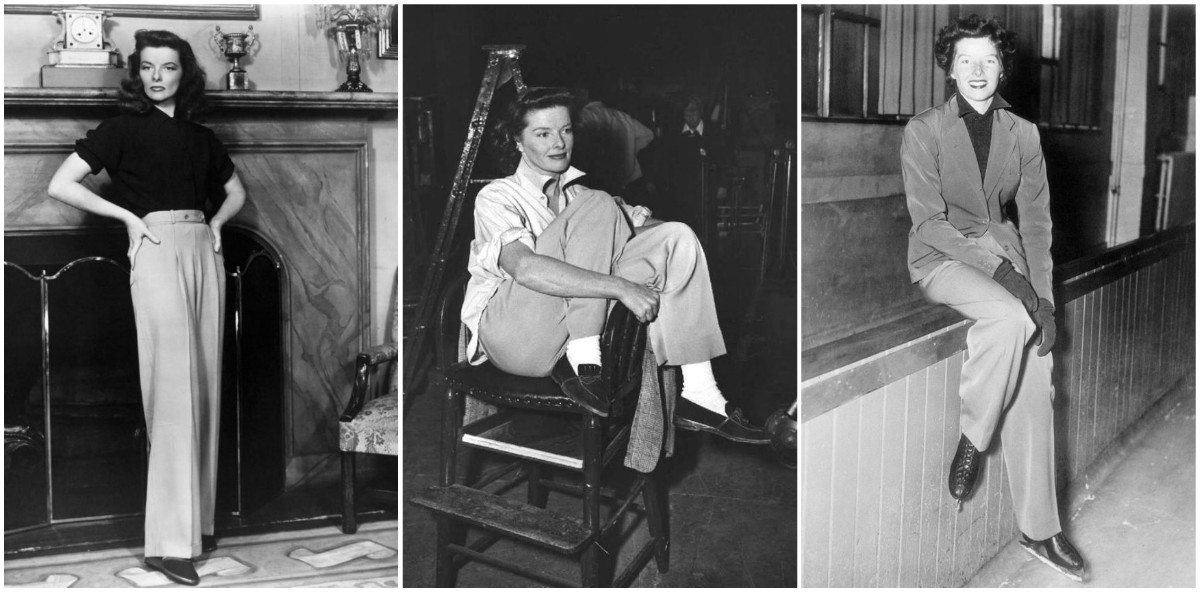
Great strides: how Annie Hall’s ‘dad pants’ conquered the world

After a year of loungewear and dressing from the waist up, these tailored but informal trousers have won over everyone from Kendall Jenner to the Duchess of Cambridge

Scrolling through the Instagram page of model and Kardashian scion Kendall Jenner, one photo, posted on 28 April, stands out. In this one, she’s not on a Vogue cover or the deck of a yacht, but crossing a New York street. And instead of a bikini or cycling shorts and a crop top, she’s wearing a pair of tailored beige trousers, cinched with a black leather belt, pleated and full in the hip, loose of leg, teamed with a white T and an oversized shirt. It’s one part Diane Keaton in Annie Hall, one part Katharine Hepburn in The Philadelphia Story, one part Kennedy weekending at Martha’s Vineyard.

Two weeks later, Danielle Haim wore an identical pair of pale, full, elegantly tailored trousers on the red carpet at the Brits, just a few days after model and entrepreneur Rosie Huntington-Whiteley posed on her Instagram in the same. (Fashion sleuths point to the Igor Pant by The Row, for sale at a cool £860, as being the originator of this trend.) In the last week of May, Jennifer Lawrence was photographed in New York wearing creamy front-pleat trousers with a cropped white T-shirt on the same day that the Duchess of Cambridge, more usually a dress-wearer, wore a slightly darker pair to attend the opening of a new hospital in Kirkwall, Scotland. International travel might be virtually grounded, but there is no stopping the global spread of this look.

Continue reading...

The Viewing Booth review – seeing is believing in the Israel-Palestine conflict

Volunteers respond to politically polarised film footage from Israel and the Palestinian territories in this critical look at interpretation

Even though he tries to maintain a cool, scientific demeanour, Israeli director Ra’anan Alexandrowicz finally lets slip a twinge of despair at the end of this interesting geopolitical Rorschach test. Alexandrowicz sits studiously behind a monitor as he invites a succession of volunteers to enter an adjacent booth. There, they have a choice of 40 clips to watch, snippets of life in Israel, while he asks them to share their thoughts on what they see. Half of the clips are from rightwing Israeli sources; the other half are from B’Tselem, an Israeli human-rights organisation that aims to document abuses of power in Palestinian territories.

Alexandrowicz quickly zeroes in on the pensive Maia, a Jewish American who supports Israel, but brings an insistent scepticism to everything she watches. He is the director of pro-Palestine documentaries such as The Inner Tour (2001) and The Law in These Parts (2011) – and believes her to be his ideal audience: a possible convert.

Continue reading...

Ned Beatty: the good ol’ boy who made playing the ordinary guy look easy

From his breakthrough in Deliverance to a memorable turn in Toy Story 3, the authenticity of Beatty’s middleman gone bad made him the perfect co-star – and often stole the show

If ever a character actor personified the “good ol’ boy” archetype of Hollywood’s new cinema of the 1970s it was Ned Beatty from Louisville, Kentucky, whose broad, open, good-natured face seemed so often to be covered with a sheen of sweat – either from suppressed guilt, or tension, from discomfort in whatever sweltering southern clime he happened to find himself. His was a smiley face bounded by its prosperous double-chin and nascent combover, a face that lent reality and approachability to the movies: an authentic and worldly presence.

Ned Beatty had the hardest role to play: the middle-ranking ordinary guy: lawyer, cop, official, politician and maybe, effectively, the wingman to the conventionally better-looking male leads, and in his 70s movie heyday this tended to mean Burt Reynolds, with whom he starred in six films, including, of course, Beatty’s brilliant and brutal breakthrough: Deliverance (1972), written by James Dickey and directed by John Boorman, in which Reynolds’s sinister alpha male businessman leads his buddies Beatty, Jon Voight and Ronny Cox on a vacation canoeing trip through the deepest Georgia wilderness only to come into horrible contact with hillbillies playing banjos and bearing grudges.

Continue reading...

How did a £120 painting become a £320m Leonardo … then vanish?

A film about the disputed Salvator Mundi blames the National Gallery for its role in giving credibility to the claim that it was the artist’s lost work

The National Gallery is facing controversy over its role in the tangled story of how the world’s most expensive painting emerged from obscurity before being sold for a staggering £320m, only to vanish again from the public eye.

The gallery exhibited the Salvator Mundi in its Leonardo da Vinci exhibition a decade ago when it was an unknown work with doubts about its attribution, restoration and ownership.

Continue reading...

Finding fangs: new film exposes illicit trade killing off Bolivia’s iconic jaguar

Undercover documentary investigates the trafficking of Latin America’s big cat to meet demand in China

Elizabeth Unger was a 25-year-old biology graduate working as a PhD research assistant for big cat and climate projects in Latin America when she heard about the Bolivian authorities intercepting dozens of packages containing jaguar fangs sent by Chinese citizens to addresses in China.

“I was really blown away as [the story] was completely under the radar,” she says. Six years later, she is making her directorial debut with a film about the trade, which is contributing to a decline in the population of Latin America’s iconic big cat.

Continue reading...