Government ‘burying head in sand’ over health inequality, says bishop of London

Exclusive: UK’s most senior female bishop calls for long-awaited white paper promising ‘bold action’

The most senior female bishop in the country has launched a scathing attack on the government, accusing it of “burying its head in the sand” over “shocking” and “rampant” health inequalities.

Dame Sarah Mullally, the bishop of London, spoke out after the Guardian reported that Thérèse Coffey was dropping the government’s long-promised white paper on health disparities.

Continue reading...

US launches effort to end hunger by 2030 by expanding benefits and access to healthy foods

Plan includes multiple ambitious proposals, such as expanding benefits like free school meals and food stamps

The Biden government has launched a new strategy to end hunger in the US by 2030 through the expansion of benefits such as free school meals and food stamps.

One in 10 households struggled to feed their families in 2021 due to poverty – an extraordinary level of food insecurity in the richest country in the world which has barely budged in the past two decades amid deepening economic inequalities and welfare cuts. Of those, children in 274,000 households went hungry, skipped meals or did not eat for entire days because there was not enough money to buy food.

Continue reading…

How the death of a Kurdish woman galvanised women all over Iran

At first, the killing of Mahsa Amini by the morality police triggered protests only among a minority – but anger with the regime soon spread

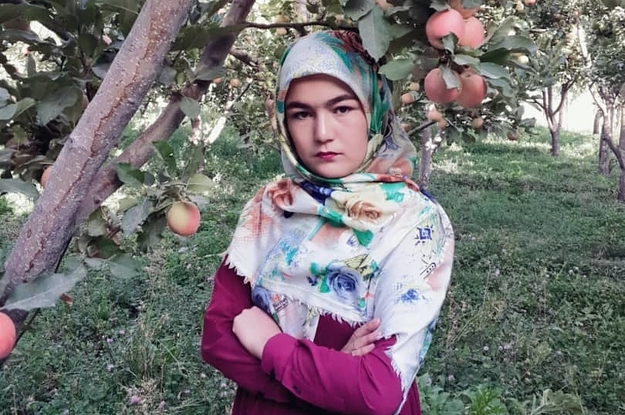
When a young Kurdish woman, Mahsa Amini, died in regime custody 10 days ago, Kurdish corners of Iran were the first to erupt; their anger at leaders they say have long oppressed them had an incendiary effect in their towns and cities.

The death of the 22-year-old, who refused to wear a hijab on a visit to Tehran, quickly became a potent symbol of defiance for a minority group that had long harboured nationalistic ambitions, which rarely stayed hidden, and often eschewed the values of the country’s hardline leaders.

Continue reading...

Revealed: black and Asian people wait longer for cancer diagnosis in England than white people

Exclusive: Analysis of 126,000 cases over a decade shows ‘deeply worrying’ racial disparities in NHS wait times

Black and Asian people in England have to wait longer for a cancer diagnosis than white people, with some forced to wait an extra six weeks, according to a “disturbing” analysis of NHS waiting times.

A damning review of the world’s largest primary care database by the University of Exeter and the Guardian discovered minority ethnic patients wait longer than white patients in six of seven cancers studied. Race and health leaders have called the results “deeply concerning” and “absolutely unacceptable”.

Continue reading...

Facing the uncomfortable possibility that healthcare is discriminatory

When Covid struck and BAME patients died disproportionately, students of heath inequalities were not surprised

As the first Covid wave hit, it quickly became clear that people from black and ethnic minority backgrounds were dying in disproportionate numbers.

The immediacy and visibility of these deaths was shocking and revealed a disparity so clear-cut that some wondered if the explanation could be genetic. But those who have spent a lifetime studying health inequalities were less surprised. People from black, Asian and minority ethnic (BAME) backgrounds do worse across a wide range of health outcomes.

Continue reading...

No improvement in school attainment gap in England for 20 years, report says

‘Overwhelming evidence’ education system leaves too many poorer students behind, despite decades of policy focus

The attainment gap between poorer pupils and their better-off class mates is just as large now as it was 20 years ago, according to a damning new report which says the coronavirus pandemic is likely to have increased the inequalities in education

The landmark study, based on research carried out for the Institute for Fiscal Studies (IFS) and funded by the Nuffield Foundation, found that disadvantaged pupils start school behind their better-off peers, and those inequalities persist through their school years and beyond – eventually having an impact on earnings.

Continue reading...

Ministers reject attempt to curb political influence over the allocation of levelling-up funds

Analysis shows half of the most-deprived areas in England have not benefited from investment

A proposal to curb ministerial influence over the £4.8bn levelling up fund after claims of possible bias in favour of Tory seats has been rejected by the government.

Analysis has revealed more than half of the 100 most deprived areas of the country have not yet benefited from the fund. The awards are under fresh scrutiny after former chancellor Rishi Sunak told an audience in Tunbridge Wells, Kent, that he changed funding formulas to divert money from “deprived urban areas”.

Continue reading...

Women offenders still being jailed despite pledge to cut prisoner numbers, say MPs

Justice committee says little progress made on developing alternatives to custodial sentences as female prison population predicted to rise by a third

Ministers have made little progress developing alternatives to custodial sentences for women, MPs have concluded, amid official predictions that the female prison population may rise by a third in the next three years.

The Conservative-led justice select committee said “there is yet to be any clear evidence” that women are being diverted away from jail despite promises to develop other methods of punishment and rehabilitation.

Continue reading...

Just one in 100 Tory MPs came from a working-class job, new study shows

Institute for Public Policy Research study also shows proportion of working-class Labour MPs has halved since 1980s

Only about 1% of the current crop of Tory MPs entered parliament from a working-class job, according to new research that suggests a growing “representation gap” in parliament.

Just 7% of all MPs can be considered “working class”, compared with 34% of all UK working-age adults. While 13% of Labour MPs joined parliament from a working-class occupation, the proportion has halved since the 1980s.

Continue reading...

Two-year wait for a wheelchair: inquiry hears of difficulty accessing NDIS for remote Indigenous communities

Royal commission told NDIA services and communications need to be tailored to meet the needs of First Nations people

An Indigenous person living with disability in a remote Northern Territory community had to wait two years for a wheelchair, a royal commission has been told.

A report into National Disability Insurance Scheme (NDIS) performance at Ngukurr, 635km from Darwin, found mainstream models of delivery were not working, and would not work in other remote areas.

Sign up to receive an email with the top stories from Guardian Australia every morning

Continue reading...

London state school pupils train to take on private schools at rugby fives

Bold experiment uses sport to boost social mobility while bringing organised games to state schools

St Paul’s and Winchester are facing a new rivalry at fives – the handball game that for hundreds of years has largely been the preserve of the most rarified public schools.

Children at Stoke Newington school in Hackney, east London, are leading a new wave of state school rugby fives players who have started training to take on their privileged counterparts in matches that will reach across one of the UK’s most entrenched social divides.

Continue reading...

Warning over Centrelink call centres as Services Australia slashes contracts

Exclusive: Agency says decision to cut outsourced workload by 30% is due to reduced demand as unions warn of longer wait times

Services Australia has embarked on a massive shake-up of its call centre operations, slashing the work it sends to labour hire firms as it approaches one of its busiest periods of the year.

Guardian Australia has learned the agency last week informed its outsourced “service delivery partners” it was cutting the “workload” sent to these four firms by about 30%.

Sign up to receive an email with the top stories from Guardian Australia every morning

Continue reading...

EU agrees ‘landmark’ 40% quota for women on corporate boards

Binding targets for boardroom gender equality come 10 years after proposals first made

The EU has agreed that companies will face mandatory quotas to ensure women have at least 40% of seats on corporate boards.

After 10 years of stalemate over the proposals, EU lawmakers hailed a “landmark” deal for gender equality. As well as the legally binding target, companies could also be fined for failing to recruit enough women to their non-executive boards and see board appointments cancelled for non-compliance with the law.

Continue reading...

AstraZeneca reviews diversity in trials to ensure drugs work for all

Firm aims to apply ‘equity lens’ across clinical tests to ensure diverse population groups take part

The pharmaceutical giant AstraZeneca is conducting a major review of diversity across its trials in an attempt to ensure its medicines work for all population groups, although it has admitted that including pregnant women is a particular challenge.

The head of oncology at Britain’s biggest drugmaker, David Fredrickson told the Guardian that the firm was among those leading efforts to improve participation of people of colour and other under-represented groups in clinical trials.

Continue reading...

Pay gap in UK between bosses and workers likely to widen in 2022

After narrowing during pandemic, analysis suggests FTSE 350 CEOs will collect 63 times average median pay at their companies

The gap between the pay of bosses and employees will widen again this year after narrowing during the pandemic, research suggests.

FTSE 350 chief executives are expected to collect 63 times the average median pay of workers at their companies , according to the High Pay Centre thinktank, which campaigns for fairer pay structures.

Continue reading...

Taliban orders female Afghan TV presenters to cover faces on air

Female anchors post pictures of themselves being ‘erased’ on orders of virtue and vice ministry

Afghanistan’s Taliban rulers have ordered all female TV presenters to cover their faces on air, the country’s biggest media outlet has said.

The order came in a statement from the Taliban’s virtue and vice ministry, tasked with enforcing the group’s rulings, as well as from the information and culture ministry, the Tolo news channel tweeted on Thursday. The statement called the order “final and non-negotiable”, the channel said.

Continue reading...

US Covid deaths hit 1m, a death toll higher than any other country

Virus has laid bare America’s fragmented healthcare system and corrosive racial and socioeconomic inequality

More than one million people have died in the Covid-19 pandemic in the US, according to Johns Hopkins, far and away the most deaths of any country.

While the sheer number of deaths from the coronavirus sets the US apart, the country’s large population of 332.5 million people does not explain the staggering mortality rate, which is among the highest in the world.

Continue reading...

‘Unacceptable’: Aviva CEO hits back at shareholder sexism

Amanda Blanc says sexism in business has actually got worse after being told she is ‘not the man for the job’

The chief executive of the insurer Aviva has hit out at sexism in the industry, saying “unacceptable behaviour” has only increased since she took more senior roles in the sector.

Amanda Blanc, who became the company’s first female chief executive in 2020, published a LinkedIn post thanking people for their support after shareholders made sexist remarks at the company’s annual general meeting on Monday. Investors said Blanc was “not the man for the job” and should be “wearing trousers”.

Continue reading...

Vulnerable Australians missing out on healthcare as insufficient Medicare rebate drives GP shortage

Fee-for-service funding model cannot keep up with cost of complex primary care needs, community organisations say

Vulnerable Australians are missing out on adequate healthcare because the Medicare rebate is failing to keep up with the costs of providing services, leading to a critical GP shortage, community health organisations say.

Not-for-profit community health organisation Cohealth has not been able to operate its street doctor service in Melbourne’s CBD – which provides a GP to people sleeping rough – for more than nine months, because it cannot find a doctor to work there.

Continue reading...